
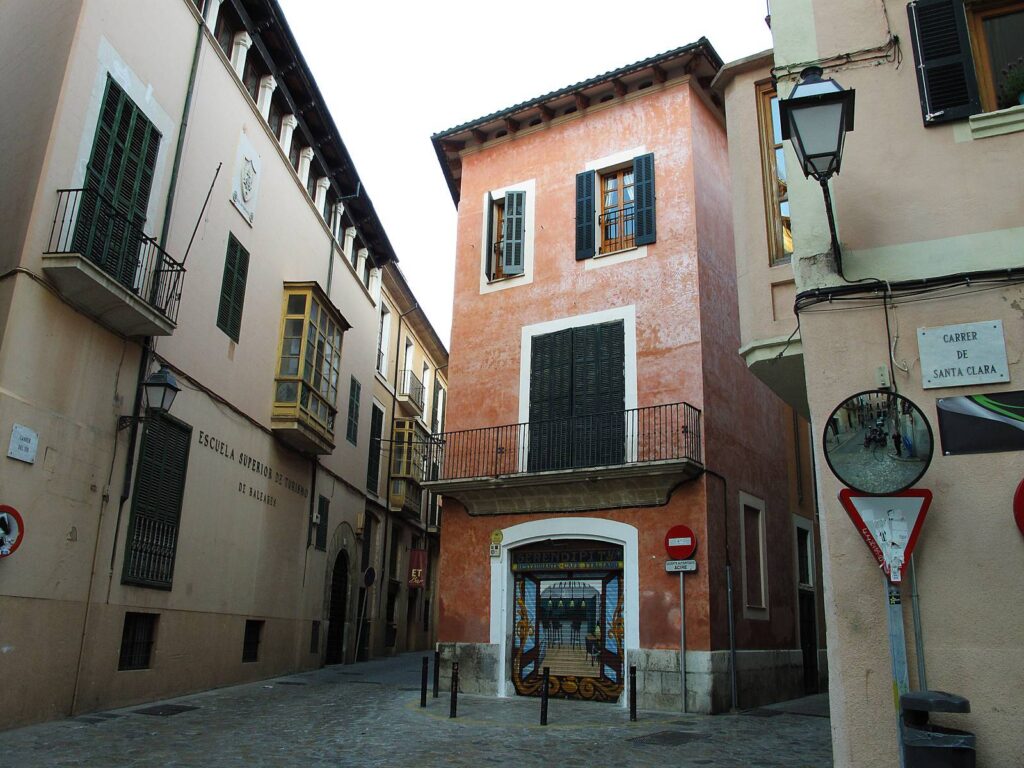
Palma is a capital you can learn by neighbourhood. The Casc Antic holds the cathedral and stone lanes; Santa Catalina feeds you; Portixol and Es Molinar slow the evening down by the water; the Born–Llotja belt keeps you oriented between old town and harbour. Choose an area that matches how you want each day to start — then wander across boundaries on foot or by short EMT hop.
This is where you’ll get a feel for each area’s vibe and fit. For where to base yourself, see Where to stay in Palma. For a landmark walk through the old town, open our Casc Antic walking guide.
Photo: Enric / Wikimedia Commons (CC BY-SA 4.0)
Casc Antic (Old Town)
Vibe: Historic, dense, walkable — Gothic towers, shaded alleys, sudden plaças and sea glimpses near La Seu.
Suits: First-time visitors, culture days, short stays, anyone who wants to step out of the door into the city’s postcard core.
Signature spots: La Seu, Palau de l’Almudaina, Banys Àrabs, lanes toward Plaça Major and Mercat de l’Olivar, the waterfront edge at Parc de la Mar.
Expect uneven stone, occasional luggage gymnastics, and lively evenings on some streets. Parking is rarely worth the stress. If Casc Antic is your base, a half-day structured walk helps you find the quieter courtyards as well as the icons — start with the Casc Antic walking guide.
Santa Catalina
Vibe: Neighbourhood energy with a strong food culture — market mornings, café terraces, streets that feel social after dark.
Suits: Food-led trips, longer stays, travellers who want a local rhythm with easy access back to the centre.
Signature spots: Mercat de Santa Catalina, the surrounding café and tapas streets, easy links toward the harbour and Passeig del Born belt.
You are a manageable walk or short hop from La Seu’s doorstep, but evenings can feel less “tourist lane” than the deepest Casc Antic. Pair this area with our Food & drink hub and What to eat in Palma.
Es Baluard / western ramparts
Vibe: Culture and open stone on the western defensive walls — bastion terraces, bay light, and an optional modern-art stop without a Gothic-maze feel.
Suits: Walkers linking Santa Catalina and Born; culture mornings with outdoor recovery; anyone who wants sea air on the muralles before or after a gallery visit.
Signature spots: The western ramparts and bastion terraces, Es Baluard (museum optional), short links toward Santa Catalina, Passeig del Born and the harbour belt.
Free orientation on the walls even if you never buy a ticket; treat interiors as optional depth checked on the official site. For the fuller vibe-and-fit read, see Es Baluard and the western ramparts.
Portixol & Es Molinar
Vibe: Harbour-promenade calm — working-and-leisure waterfront, sea air, slower nights.
Suits: Couples, return visitors, swimmers, anyone who wants beach-town-adjacent evenings without leaving Palma.
Signature spots: The Portixol harbour front, the Es Molinar promenade, cafés facing the water, city swimming close to home.
You will use walks, buses or taxis more often for Casc Antic sights and Santa Catalina dinners. Ideal if sea air at the end of the day matters more than waking on La Seu’s square. For a fuller vibe-and-fit read, see our Portixol and Es Molinar neighbourhood guide.
La Llotja / Passeig del Born
Vibe: Polished central spine — trees, terraces, clear orientation between old town and marina.
Suits: Travellers who like a landmark boulevard as their mental map; shopping streets; easy harbour access.
Signature spots: Passeig del Born, La Llotja (Spanish: La Lonja), the surrounding gallery-and-terrace belt toward the waterfront.
Less “village” than Es Molinar, less market identity than Santa Catalina — but excellent for first-day orientation and evening strolls. From here, Casc Antic lanes pull east/uphill; the marina and harbour walks pull toward the water. The full guide is La Llotja and Passeig del Born.
Waterfront / Parc de la Mar
Vibe: Open sky and cathedral drama — promenade, reflections, the city’s most cinematic free outlook.
Suits: Anyone based nearby; sunset walkers; people who want sea air between museum rooms.
Signature spots: Parc de la Mar below La Seu, the walk linking cathedral square to harbour-facing streets, views back to the Gothic façade.
Treat this less as a “place to sleep” and more as the shared outdoor room of central Palma. It pairs naturally with Casc Antic mornings and Born evenings.
Light note: El Terreno
West of the centre, El Terreno sits toward the Bellver and waterfront-west side of town — historically linked to nightlife and hillside streets above the bay. It can suit travellers who want a different angle on the city or easier access toward Castell de Bellver, but it is not the classic first-stay choice for Casc Antic walkers. Weigh distance to La Seu and Santa Catalina against the views and quieter residential pockets; see Stay for area trade-offs.
Plan your base
- Where to stay in Palma — which neighbourhood suits whom (area guide only)
- Casc Antic walking guide — old-town route without the rush
- Things to do — icons, markets, harbour and city beaches
- Food & drink — markets and neighbourhood eating cues
Pick the area for how you want to live the trip — then cross town for the rest. Palma is small enough that a good base beats a perfect address.