
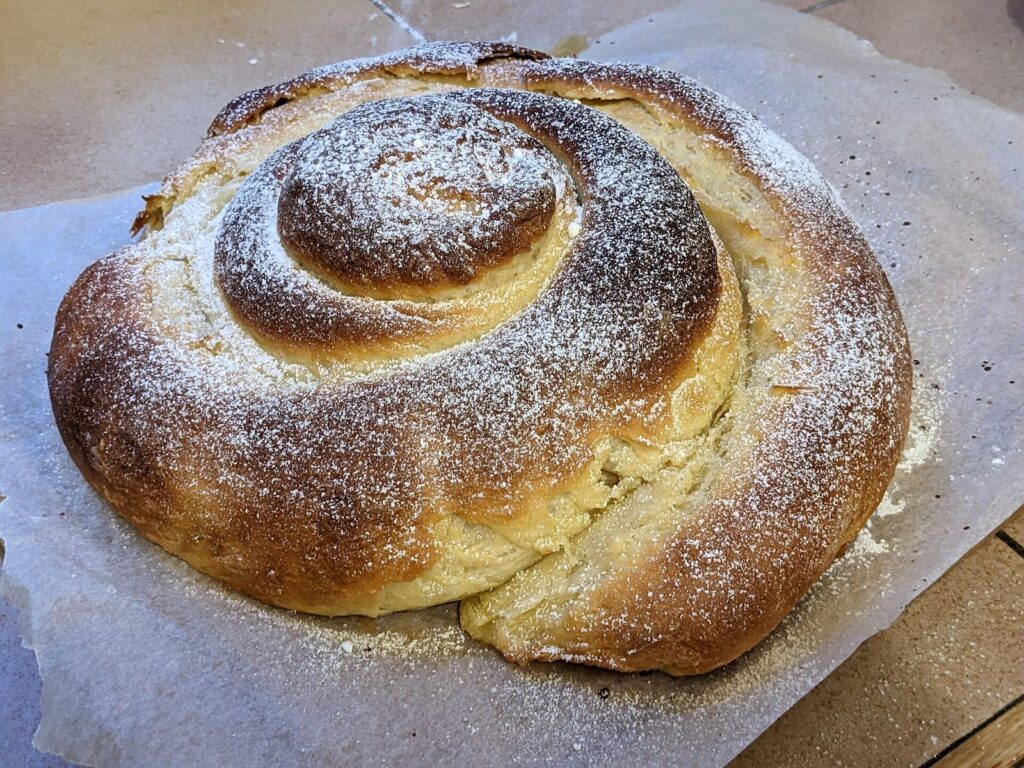
Palma eats well. Between Mallorcan staples, Mediterranean seafood, and a lively market culture, you can eat simply and memorably without chasing trends. Here’s what to look for: classic dishes, markets, and neighbourhoods.
For a neighbourhood base built around markets and terraces, see Santa Catalina.
Mallorcan staples worth seeking out
Ensaimada
The island’s signature pastry: a coiled, airy sweet made with lard (saïm), often dusted with icing sugar. Plain ensaimada is the classic; filled versions (cabell d’àngel, chocolate, cream) appear widely too. Eat it for breakfast with coffee, or take one home as an edible souvenir — bakeries across Palma sell them, and airport shops stock packaged ones for travel.
Sobrassada
Soft, spreadable cured sausage flavoured with paprika (pebre bord). It is a Mallorcan pantry essential: on toast, in cocas, or cooked into dishes. Look for quality versions at markets and traditional butchers; the texture should be rich and spreadable, not dry like a hard sausage.
Tumbet
Mallorca’s answer to a layered vegetable bake: typically aubergine, potato, and red pepper, finished with tomato. It is comforting, seasonal, and often served as a side or a vegetarian main. When it is good, the vegetables are soft and sweet rather than oily.
Seafood
Palma is a port city. Expect fish of the day, grilled squid, prawns, and rice dishes that change with the catch and the season. Ask what is fresh rather than ordering from memory of a photo menu. Simple preparations — grilled, baked, or in a light stew — usually show the produce best.
Pa amb oli
Bread with oil, in the Mallorcan sense: toasted bread rubbed with tomato (and sometimes garlic), dressed with olive oil, and topped as you like — cheese, sobrassada, ham, olives. It is everyday food elevated by good oil and ripe tomato. Ideal for a light lunch or a shared starter.
Local cheese
Mallorca produces cheeses that pair naturally with sobrassada, fruit, and wine. Look for island cheeses at market stalls and specialist shops; ask for a taste when offered. A small board with bread and olives makes an easy picnic or terrace snack.
Market culture
Markets are where Palma’s food culture feels most tangible: produce stacked high, fish on ice, and locals shopping for the evening meal. For a dedicated visiting guide — how to use Olivar and Santa Catalina, etiquette, and day-plan pairings — see Mercat de l’Olivar and Palma markets.
Mercat de l’Olivar
Mercat de l’Olivar is Palma’s central covered market, close to Plaça d’Espanya and the old town edge. Ground-level stalls sell fruit, vegetables, meat, cheese, and fish; upstairs and surrounding spots often lean more towards casual eating. It is a strong first stop if you want to see the range of Mallorcan ingredients in one place — and to pick up picnic supplies or a quick bite between sights.
Go with curiosity rather than a shopping list. Point, ask, and try small amounts. Mornings are typically the liveliest for produce; exact stall hours vary, so treat published times as a guide and check locally if you are timing a visit carefully.
Mercat de Santa Catalina
Mercat de Santa Catalina sits in the neighbourhood of the same name and has a more neighbourhood-meets-foodie feel. It is smaller than Olivar but easy to combine with a wander through Santa Catalina’s streets afterwards. Ideal for grazing, spotting seasonal produce, and easing into lunch nearby.
Both markets reward a slow circuit: fish counters, olive oils, sausages, and fruit that looks (and smells) like it was grown for flavour rather than shelf life.
Neighbourhood guidance
Santa Catalina — the city’s food hub
Santa Catalina is where many residents and visitors naturally end up when they want to eat well. The streets around the market hold tapas bars, wine-focused spots, and kitchens that range from traditional to contemporary Mediterranean. The vibe is lively in the evening; lunch can feel more local.
Use the market as your anchor, then explore outward. You do not need a famous name on the door — look for busy terraces with a mix of languages and ages, menus that change, and staff who can explain dishes without a hard sell.
Casc Antic — enjoy it, choose carefully
The Casc Antic (old town) is beautiful and convenient: cathedral views, narrow lanes, and plenty of places to sit down. It is also where tourist-trap menus cluster — laminated multi-language lists, aggressive touting, and generic “Mediterranean” plates that could be anywhere.
That does not mean avoid the old town. It means slow down and choose with intent. A short walk off the busiest cathedral approaches often improves the feel. Prefer places that look settled into their street, that list daily specials, or that are clearly catering to people who live nearby as well as visitors. Trust atmosphere and ingredient quality over neon and photo boards.
Excellent meals happen in the Casc Antic; so do forgettable ones. Your best filter is curiosity plus a little patience.
How to eat well without overthinking it
- Start with markets when you can — they teach you what is in season.
- Order a mix of Mallorcan staples and whatever fish looks best that day.
- Share plates if you are two or more; you will taste more.
- Leave room for ensaimada at some point in the trip — morning or afternoon, both work.
- Drink what suits the meal: local wine, a caña, or simply water with good olive oil and bread.
Palma’s food story is not about chasing stars. It is about bread and oil done properly, sausage with character, vegetables cooked with care, and seafood that tastes of the coast. Eat like that and you will leave understanding the island a little better.