

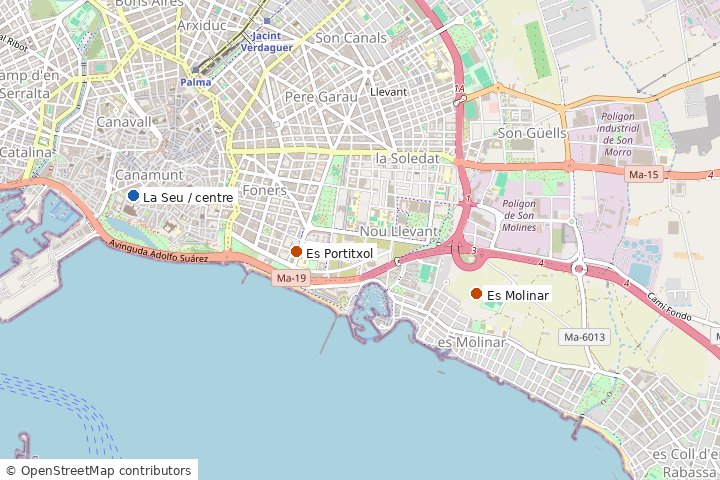
Portixol and Es Molinar sit east of Palma’s historic centre along a working-and-leisure waterfront. Harbour light, a promenade you can walk without a map, and swimming close to cafés facing the water — still inside the city, but with a slower rhythm than the Casc Antic lanes around La Seu.
This is a vibe-and-fit guide for half-days and stay decisions, not a facilities checklist. For urban swims and how this stretch sits beside Can Pere Antoni, see Beaches you can reach from Palma. For whether to base yourself here, see Where to stay in Palma and the Neighbourhoods hub.
Photo: Rafael Ortega Díaz / Wikimedia Commons (CC BY-SA 4.0)
Cover vibe
Think harbour and promenade more than Gothic postcard. Portixol gathers around its small harbour; Es Molinar continues the waterfront feel eastward — beach-town-adjacent evenings without leaving Palma. Mornings can be quiet and bright; midday heat pushes people toward shade and water; evenings open up with terraces looking over the bay.
Expect scooters on the seafront road, fishermen and leisure boats sharing the same view, and a pace that rewards an unhurried circuit rather than a checklist. It is less dense than the Casc Antic, less market-and-tapas driven than Santa Catalina, and more sea air at the end of the day than either.
Who it suits
- Quieter seaside bases — travellers who want to sleep near the water without booking a resort strip.
- Couples and return visitors — anyone who already knows La Seu and prefers evenings with harbour light over deep tourist lanes.
- Swim-and-promenade days — people happy to mix a dip (when conditions allow) with coffee facing the water.
- Half-day explorers from a central stay — visitors based in Casc Antic or Santa Catalina who want a slower afternoon east along the bay.
It is less ideal if every morning must start on the cathedral square on foot, or if you want Santa Catalina’s market energy outside the door. For old-town density, see our Casc Antic walking guide; for food-led streets, the Santa Catalina guide.
What to do
Waterfront walk
The signature pleasure is simple: walk the harbour and promenade. Start near Portixol’s boats and follow the water east toward Es Molinar, or reverse the circuit depending on where you arrive. Pause for views back toward the city, watch the light change on the bay, and treat the stretch as an outdoor room rather than a timed attraction.
Comfortable shoes help on longer circuits; in high summer, walk early or late and keep the hottest hours for shade or water — see heat notes in Practical.
Swimming spots
There are places to swim along this waterfront when the season and conditions allow. Think urban-and-neighbourhood sea rather than a remote cove: convenient, popular in peak months, often kinder in shoulder season. Check seasonal conditions, local flags and on-the-day advice before you go. Those details change, and the sea is still the sea.
Pair a swim with the promenade rather than treating this as an all-day resort beach. For how Portixol–Es Molinar sits beside Can Pere Antoni and further options, use Beaches from the city.
Cafés facing the water
Cafés and terraces along the harbour and promenade are part of the point: sit with a view, share something simple, and let the afternoon lengthen. Look for places that feel settled into the waterfront rather than parked for a single coach stop. You do not need a famous name on the door — a honest terrace and a clear sightline over the boats usually serve you better.
Leave space for a Casc Antic or Santa Catalina meal another evening if you want markets and denser food streets; here the draw is sea air with your coffee or late lunch.
Link toward city beaches and Casc Antic
From this eastern waterfront you can connect mentally (and often on foot or by short hop) toward Can Pere Antoni and the cathedral side of town — Parc de la Mar, La Seu, and the Casc Antic lanes. Culture mornings in the old town plus a Portixol evening is a classic Palma rhythm; so is a swim-and-promenade half-day before returning to a Born or Santa Catalina base.
Palma Bay catamaran day trip on Viator. Compare hotels near Portixol. Also Mallorca experiences on Klook. See our affiliate disclosure.
Getting there
From the centre you can typically reach Portixol and Es Molinar by walk, EMT Palma city bus, or taxi, depending on where you are staying, the heat, and how much energy you have after a Casc Antic morning.
Line numbers, journey times and fares change. Check current maps and tickets on EMT Palma (and treat any old blog table as unreliable). Walking suits cooler parts of the day and lighter bags; a taxi is useful in peak heat, with luggage, or late at night. For arrival into Palma itself and wider transport framing, see Airport to centre and getting around and Practical.
Stay angle: base here or elsewhere?
Base in Portixol / Es Molinar if sea air at the end of every day matters more than waking on La Seu’s square. Couples, return visitors and swim-led stays often fit well: you trade some doorstep culture for harbour calm and a beach-town-adjacent rhythm still inside Palma.
Prefer Casc Antic if this is a first visit focused on Gothic stone, museums and stepping straight into the postcard core. Prefer Santa Catalina if markets, tapas streets and neighbourhood food energy are the priority. Many travellers still visit Portixol as a half-day from a central base — that works well too.
For the full area comparison, see Where to stay in Palma and the Neighbourhoods hub.
Plan from here
- Neighbourhoods of Palma — how Portixol and Es Molinar sit beside Casc Antic, Santa Catalina and Born
- Where to stay in Palma — area fit if you are deciding where to base
- Beaches you can reach from Palma — Can Pere Antoni, this stretch and further hops
- Casc Antic walking guide — old-town landmarks when you head west for culture
- Practical — EMT, walking, heat and official sources
Portixol and Es Molinar reward an unhurried circuit: harbour, promenade, a swim when the day allows, and a terrace facing the water — then Casc Antic stone or Santa Catalina supper when you want the city’s denser side.