
Palma’s markets are where the city’s food culture feels most tangible: produce stacked high, fish on ice, cheese and olive oil offered with a taste, and locals shopping for the evening meal. Visit them for ingredients, picnic supplies, atmosphere and a slow morning circuit — not for a ranked restaurant hit-list.
Here’s how to make the most of the markets, whether you’re browsing, shopping or stopping for a bite. For classic dishes and how staples show up at the table, see What to eat in Palma. For the neighbourhood that grew up around the smaller covered market — streets, evenings and who it suits — see our Santa Catalina guide. The Food and drink hub ties staples, markets and area cues together.
Market days, stall hours and holiday patterns change. Treat any timetable you see online as a starting point and check official municipal or market sources before you time a visit carefully.
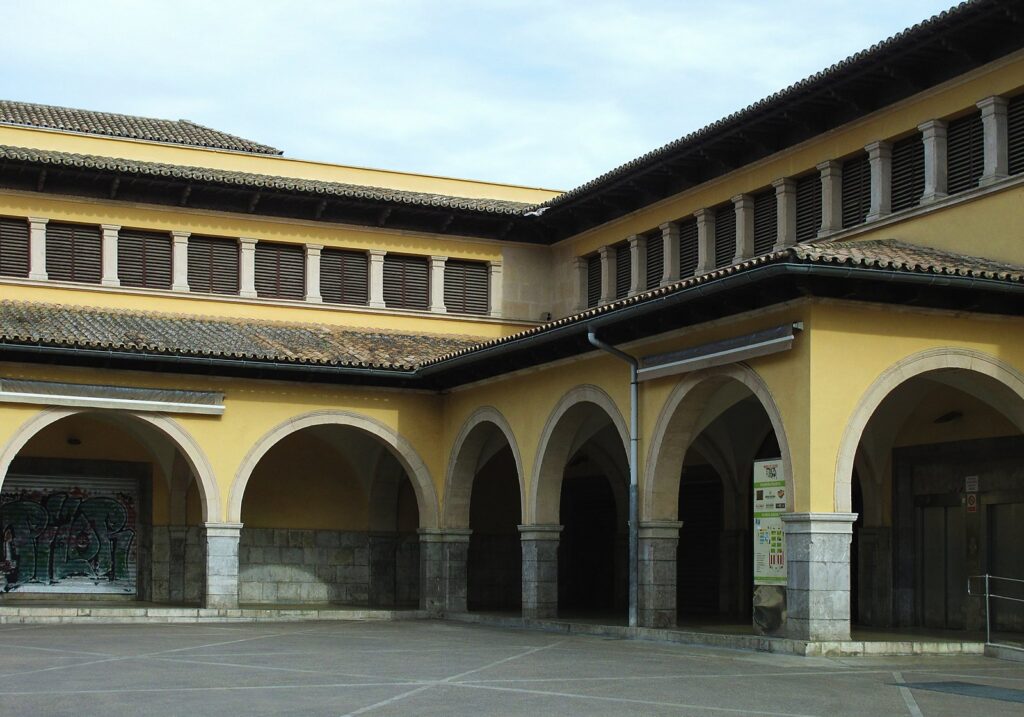
Photo: Enric / Wikimedia Commons (CC BY-SA 4.0)
Mercat de l’Olivar
Mercat de l’Olivar is Palma’s central covered market — the big, busy one most first-time visitors hear about. It sits near Plaça d’Espanya and the edge of the Casc Antic, which makes it a natural stop between transport, old-town wandering and a morning of sightseeing rather than a destination only for dedicated food tourists.
Inside, expect the classic municipal-market spread: fruit and vegetables, meat and charcuterie, cheese, bakery goods, and a serious fish counter culture. The feel is practical first — people shopping for supper — with a layer of casual eating that has grown upstairs and around the building over time. You can treat Olivar as a look-and-learn circuit, a place to assemble a picnic, or somewhere to grab something simple between sights. You do not need to “do” every aisle; a slow loop with curiosity beats a checklist.
Who it suits
- Travellers who want one strong introduction to Mallorcan ingredients in a single building
- Anyone assembling picnic or apartment supplies — bread, fruit, cheese, olives, oil
- Casc Antic or Plaça d’Espanya–side itineraries that need a food pause without committing to a full restaurant meal
- Return visitors who already know La Seu and want atmosphere over another laminated menu lane
It is less ideal if you only want a quiet neighbourhood graze with terrace life afterwards — that energy sits more naturally in Santa Catalina. Olivar is the city-scale market; Santa Catalina is the quarter-scale one.
Produce, fish, meat and cheese
Walk the ground-level stalls with your senses switched on. Fruit that smells of itself, fish that looks wet and bright, cheeses you can ask about, olive oils and sausages that invite a small taste when offered. Point, ask, and buy small amounts if you are travelling light. Quality varies stall to stall, as in any living market — follow the queues of people carrying baskets, not the loudest display aimed at passers-by.
Casual eating upstairs and around the market has become part of the Olivar story for many visitors. Opening patterns and reputations shift, so trust what you see on the day. Look for places that feel settled into the market’s rhythm, that can explain what is good today, and that are serving a mix of shoppers and sit-down guests. If a counter looks frantic or purely photo-driven, keep walking — there is usually another option a few metres on.
Picnic and supplies angle
Olivar is excellent for the practical trip: fruit for the hotel room, cheese and bread for a harbour bench, olives and sobrassada for an apartment evening. If you are staying with a kitchen, a market shop can be more satisfying than a supermarket run. If you are sightseeing with a day bag, keep purchases small and cool — summer heat is unforgiving on soft cheese and fish.
For location context: you are close to the Casc Antic’s northern edge and the Plaça d’Espanya transport hub. Exact walk times depend on your pace and the day’s heat. Comfortable shoes and an early start beat rushing across stone streets at midday — see heat and city notes in Practical.
Want to shop the stalls with someone who knows them? This Olivar market visit and Mallorcan cooking workshop starts at the market and finishes with lunch you’ve cooked yourself. See our affiliate disclosure for how partner links work.

Mercat de Santa Catalina
Mercat de Santa Catalina is smaller and sits inside the neighbourhood of the same name — west of the Casc Antic and the Passeig del Born belt. It has a more neighbourhood-meets-foodie feel: still a working market, still produce and fish and cheese, but easier to combine with coffee, a terrace and a wander through Santa Catalina’s streets afterwards.
Use it as an anchor for a food-led half-day rather than a standalone “sight”. Do a slow circuit of the stalls, pick up something for later, then drift outward into the café and tapas streets. The market rewards the same etiquette as Olivar — mornings typically feel livelier for produce; stall hours vary; check official market information if timing matters.
For vibe, who the quarter suits, evening energy and walkability toward Born and Casc Antic, open the full Santa Catalina neighbourhood guide.
How to visit well
Mornings are typically when produce feels liveliest and the markets feel most like places where residents shop. Midday heat can thin the aisles in summer; exact closing patterns and partial openings change by day and season, so confirm on official Ajuntament de Palma pages or each market’s own information before you pin a tight schedule.
Etiquette that works: point at what you want, ask for a small amount, accept a taste when offered, and do not block a busy counter while you decide. A few words of Catalan or Spanish help; smiling and patience help more. You are in someone’s workplace, not a food hall designed only for visitors.
Cash and cards: many stalls take cards these days, but not all, and small purchases can still be easier with cash. Carry a little of both and do not assume every counter is the same. Ask at the stall.
Heat and comfort: covered markets are cooler than open streets, but queues and bags still tire you. Travel light, drink water, and leave room in your bag (and stomach). If you are combining with Casc Antic stone and sun, plan the market for the cooler part of the day — see Practical.
Holiday and Monday quirks: fish counters and individual stalls sometimes follow different patterns from the building’s headline hours. When in doubt, check locally rather than trusting a blog timetable from last year.
What to look for on the stalls
A short shopping compass, not a second staples essay:
- Ensaimada — the coiled pastry; bakeries and market stalls both sell them
- Sobrassada — soft paprika-cured sausage; look for rich, spreadable texture
- Local cheese — ask for a taste; pair with bread and fruit
- Olive oil — island and peninsula bottles; buy what you will use or can pack
- Seafood — ask what is fresh that day rather than ordering from a photo
For how these show up at the table — tumbet, pa amb oli, seafood preparations and more — stay with What to eat in Palma. Markets teach seasonality; that guide teaches the plate.
Markets vs Casc Antic tourist-lane eating
The Casc Antic is beautiful and convenient: La Seu, narrow lanes, courtyards and plenty of places to sit down. It is also where tourist-trap menus cluster — laminated multi-language boards, aggressive touting and generic “Mediterranean” plates that could be anywhere.
Markets are a useful antidote. An Olivar morning or a Santa Catalina graze resets your sense of what good produce looks and smells like. After that, old-town choices get easier: you recognise ingredient quality, you are less hungry for the first terrace with a photo board, and you can enjoy Casc Antic kitchens that feel settled into their street.
That does not mean avoid the old town. It means choose carefully near La Seu and the busiest approaches, step a lane or two off the main funnel when you can, and save at least one meal for market culture or Santa Catalina’s streets. Pair sightseeing with our Casc Antic walking guide; keep dinner decisions curious rather than desperate.
Pairing with a day plan
Casc Antic morning + Olivar: start early at La Seu or a Casc Antic loop, then use Mercat de l’Olivar for a look, a picnic shop or a casual bite before the heat peaks. Plaça d’Espanya proximity makes this a practical geography, not a forced combo.
Santa Catalina food day: market circuit, surrounding streets for coffee or lunch, rest in the heat, evening terraces. Full neighbourhood notes live in the Santa Catalina guide.
Weekend outline: fold a market morning into Palma in 48 hours and skim Best things to do in Palma if you are still choosing priorities. Markets sit happily beside cathedral, harbour and neighbourhood wandering — they do not need a whole day unless you want one.
If you are still deciding where to base yourself for food-led evenings, Where to stay in Palma and the neighbourhoods hub help with fit; Santa Catalina often wins for market-and-terrace rhythm without locking you out of Casc Antic mornings.
Prefer to graze? The Palma food tasting walk takes in the Old Town and stops inside the Olivar for tapas and a glass of local wine.
Related guides
- Food and drink in Palma — hub for staples, markets and area cues
- What to eat in Palma — ensaimada, sobrassada, seafood and how to choose without hype lists
- Santa Catalina — neighbourhood market, streets and evening feel
- Casc Antic walking guide — old-town landmarks; choose eating carefully near La Seu
- Palma in 48 hours — market mornings in a weekend outline
- Best things to do in Palma — city priorities beyond food
- Practical — heat, getting around and trip logistics
- Where to stay — area fit if food rhythm shapes your base
Palma’s markets reward slow feet and an open appetite. Go for the produce and the people shopping beside you; leave the ranked lists elsewhere — including here.