
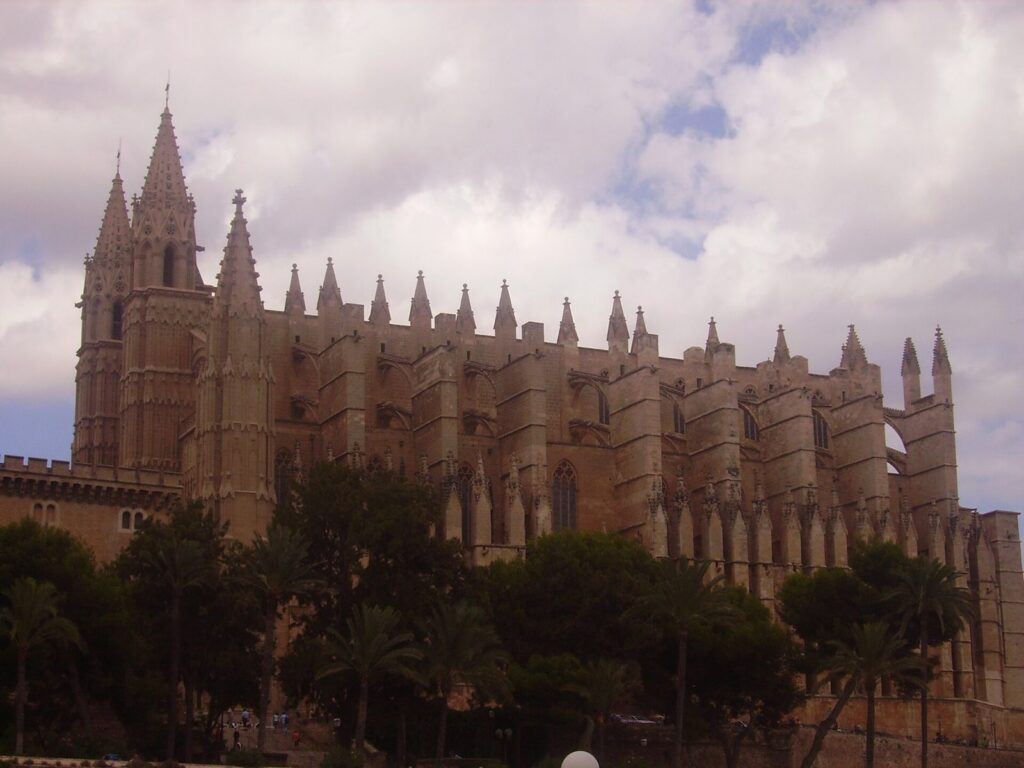
Palma works year-round as a city break, but the feel of the trip shifts with the season: how hot the stone streets are at noon, how busy La Seu’s approaches feel, and whether a spontaneous swim or Tramuntana day trip is the easy choice.
For arrival and getting around, see Practical Palma and Airport to centre and getting around Palma.
Shoulder seasons — April to June, September to October
Spring (roughly April–June) and autumn (roughly September–October) are the periods many travellers find kindest for a Palma-based trip. Days are often warm enough for harbour walks and café terraces without the full weight of August heat; light is soft; and city lanes can feel more spacious than in peak summer.
These months suit:
- Casc Antic wandering and market mornings without constant midday retreat
- Day trips into the Serra de Tramuntana (Sóller, Valldemossa, Deià) with less extreme heat stress
- Mixing culture and swimming when the sea and your own comfort allow
Exact weather still varies year to year. Pack a layer for breezier evenings and always check a local forecast before mountain or boat plans. Shoulder season is a pattern, not a guarantee of empty streets — popular weekends and holidays can still be lively.
Peak summer — heat and crowds
High summer brings long beach days, lively evenings and the fullest visitor calendar. It also brings heat that shapes the itinerary: stone streets amplify midday glare, exposed castle hills and village climbs need respect, and a “slow lunch, late swim” day often beats a packed noon checklist.
Practical habits that travel well (also summarised in the Practical hub):
- Walk early or late; keep interiors and markets for the hottest hours when it suits
- Carry water; use shade on Passeig del Born and along Parc de la Mar
- Pace Casc Antic climbs and Tramuntana ambitions
- Treat city beaches and Portixol swims as busy urban sea in peak months
If summer is when you can travel, Palma remains rewarding — just plan for heat rather than against it. Book popular day-trip experiences ahead when you can, and confirm official timetables (Ferrocarril de Sóller, TIB, EMT) rather than assuming shoulder-season frequency.
Winter — a quieter city break
Winter Palma can be atmospheric: shorter days, softer light on La Seu, and a more local rhythm in neighbourhoods such as Santa Catalina. It suits travellers who prioritise food, museums, old-town wandering and harbour walks over guaranteed beach weather.
Expect more variable conditions for boat outings and mountain days — wind, rain and cooler air are possible. Swimming is a personal comfort call rather than a default; some visitors still dip on milder days, many do not. Pack layers, check forecasts, and lean into the city’s indoor and terrace life.
Winter is also when a central, walkable base pays off: less reliance on beach weather, more on Casc Antic lanes and market mornings. See Where to stay and Neighbourhoods.
Swimming season
Comfortable sea swimming from a Palma base is most often associated with the warmer months — typically late spring through early autumn — with peak summer the most reliable for long beach hours. Shoulder months can still offer good dips depending on the year, wind and your own tolerance; winter is more hit-and-miss.
City options such as Can Pere Antoni and the Portixol–Es Molinar waterfront, plus short hops toward Illetes or the Playa de Palma belt, are covered in Beaches you can reach from Palma. Always check seasonal conditions and flags on the day;
Festivals and events
Local festivals and events can enrich a trip, but dates and programmes change. If a particular fiesta or cultural event matters to you, confirm the dates on official city or regional tourism sources for the year you travel.
The same rule applies to prices, opening hours and transport schedules throughout Visitor Break Palma: check official sources (Aena, EMT Palma, TIB, and each attraction’s own site).
Choosing a season, quickly
| If you want… | Lean toward… |
|---|---|
| Balanced warmth, walking and fewer extremes | Apr–Jun or Sep–Oct |
| Longest beach days and fullest summer energy | Peak summer (with heat planning) |
| Quieter streets, food and culture focus | Winter city break |
| Easier Tramuntana wandering | Shoulder seasons over midsummer midday |
| Most flexible swimming | Warmer months; always check conditions |
There is no single “best” month — only a better match for how you like to spend the day.
Related reading
- Practical Palma — walking, EMT/TIB, heat tips and official sources
- Airport to centre and getting around Palma — arrival without guessed fares
- Beaches you can reach from Palma — city and short-hop swimming
- Day trips — when mountain weather and energy favour leaving town
- Things to do — what to fill cooler or hotter hours with
Pick the season for the trip you actually want — then let Palma’s markets, harbour light and neighbourhood evenings do the rest.